
Notes from the Reading Room: Preserving Shakespeare
by David Rhys Owen, Director of Collections & Research Services
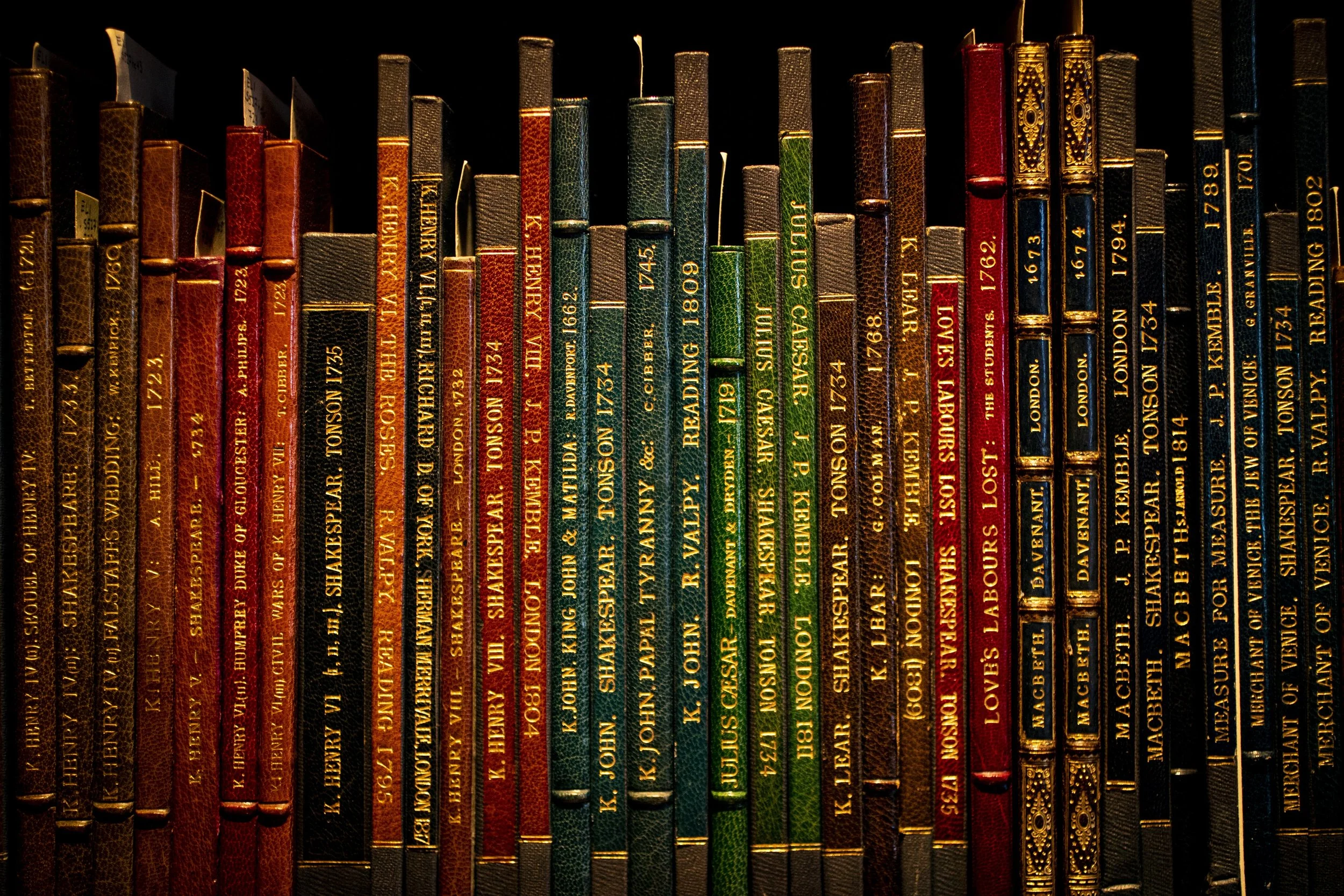
![William Shakespeare (1564-1616), The excellent history of the merchant of Venice... [London] : Printed by I. Roberts [i.e. by William Jaggard for Thomas Pavier], 1600 [i.e. 1619].](https://images.squarespace-cdn.com/content/v1/66fb68a83ed38c0c99c762f9/1787929441986-PFKYLZ7MIIS3NJG49UKS/04_01_2021_Rosenbach_225.JPG)
What better month than September to return to Shakespeare?
As summer gives way to fall, we return to the rhythms of the theatrical and academic year; stages announce new seasons, classrooms reopen, and audiences encounter Shakespeare anew. It is a fitting moment, then, to consider how Shakespeare’s works have returned to readers and theatergoers across centuries, not only through performance but also through the printed books that preserved, reshaped, and elevated his reputation after his death.
During his lifetime, the plays of William Shakespeare were typically published in quarto format, intended to be cheap and read until worn out or repurposed. After the playwright’s death in 1616, his colleagues John Heminges and Henry Condell worked to compile a stable collection of his complete works. In a statement about the rising status and significance of Shakespeare’s work, these books were published in the more expensive folio format, traditionally reserved for history, religion, and other important subjects.
In his lifetime, our founder, Dr. A.S.W. Rosenbach, bought and sold many copies of works by Shakespeare. He also compiled a remarkable personal collection that included all four Folios, the 1609 Sonnets, and other early and rare editions. Although Dr. Rosenbach sold this collection in 1952, the Rosenbach Museum & Library retains copies of the Second, Third, and Fourth Folios, a 1765 eight-volume edition edited by Samuel Johnson, and quartos of individual plays that speak to changing approaches to the playwright through the long 18th century. These printed books are supplemented by other objects that highlight the place of the “Bard of Avon” in the popular imagination, from William Henry Ireland’s infamous manuscript forgeries to models from Clara Fisher’s “Shakespearean cabinet.”
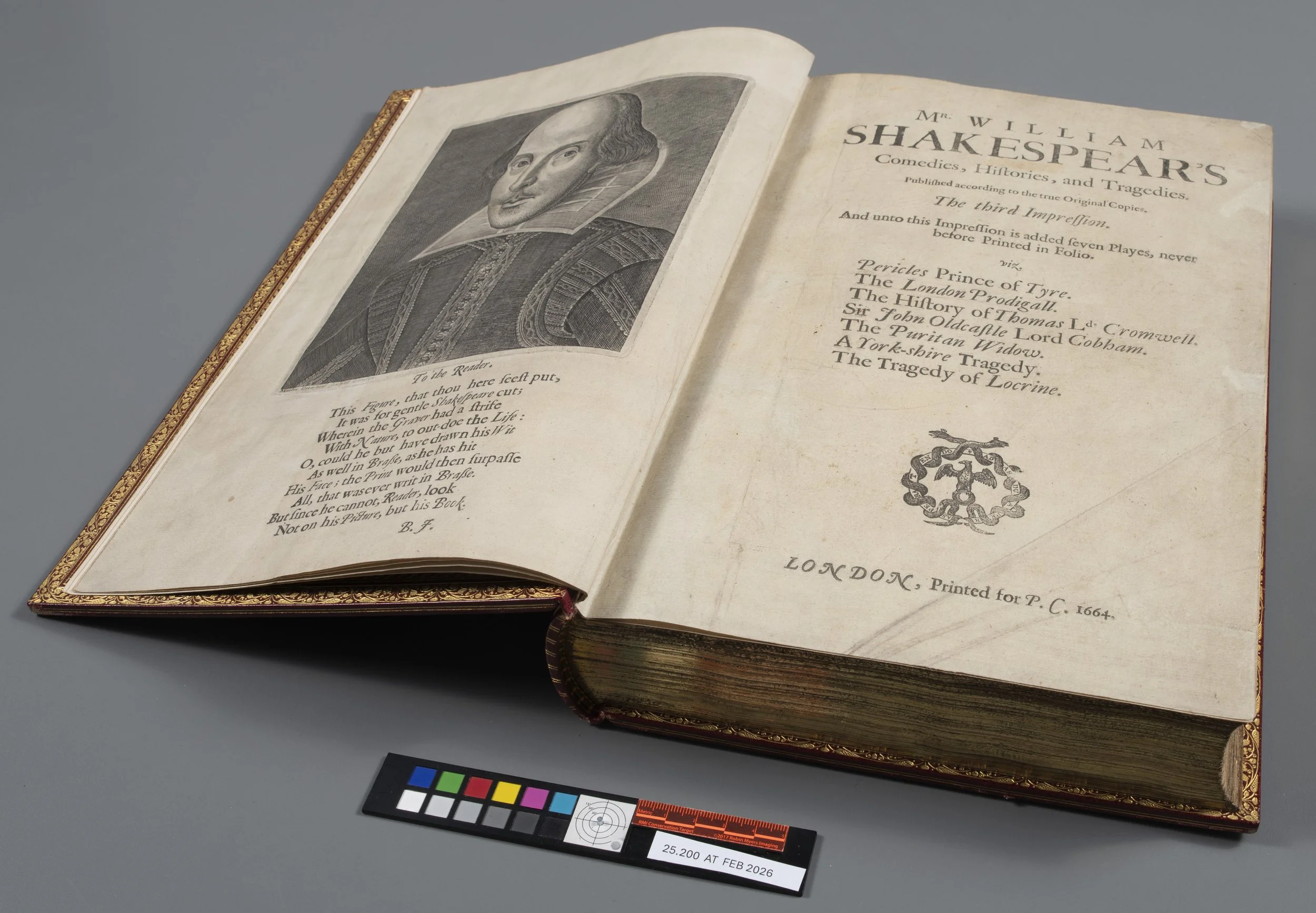
The Third Folio was published in two impressions in 1663 and 1664 by Philip Chetwinde. It was the first Folio issued after English theaters reopened with the Restoration of King Charles II in 1660, and it is particularly rare, given that many unsold copies were destroyed in the Great Fire of London. The Rosenbach holds a copy of the 1664 second impression, notable for adding seven plays not previously included in earlier Folios, although only one, Pericles, Prince of Tyre, is now considered part of the Shakespearean canon.
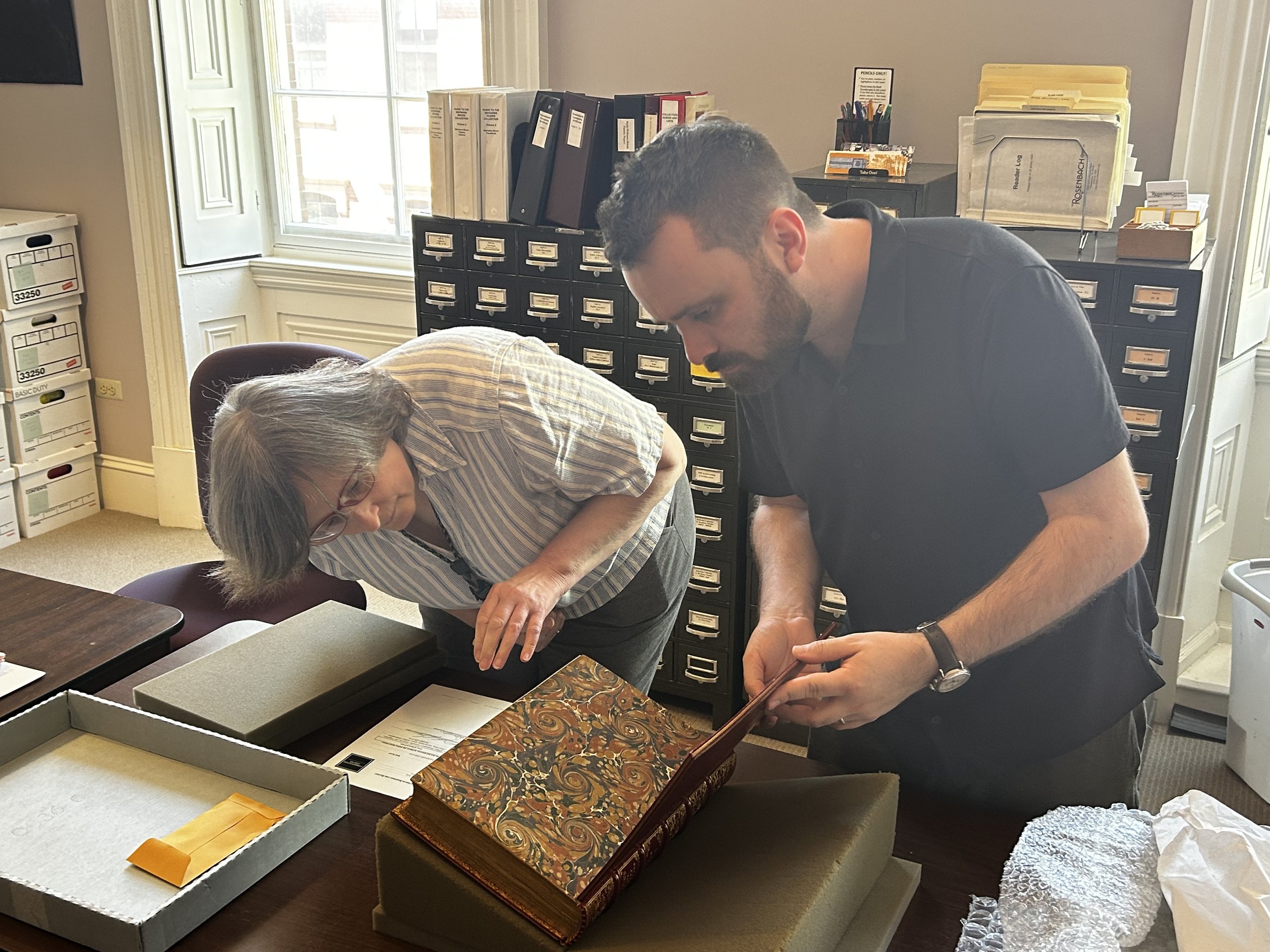
Our copy of William Shakespeare’s Third Folio recently underwent conservation treatment at the Conservation Center for Art & Historic Artifacts (CCAHA), thanks to the generous support of Robert K. Urquhart. The Rosenbach Museum & Library undertakes conservation projects so that visitors can continue to access, engage with, and be inspired by our collections of books, manuscripts, and fine and decorative arts. The book is now on display in one of our three rotating exhibitions, Treasures... Literature of Great Britain and Ireland.
Visit the Rosenbach’s online library catalog, Rosy, to explore the works of William Shakespeare in our collections. Then, book a research appointment or make a collections inquiry, to make your own discoveries and enjoy a personalized experience with some of the best-known literary and historical objects in the world