
Collecting Signers of the Declaration - New York
by Elizabeth Fuller, Librarian
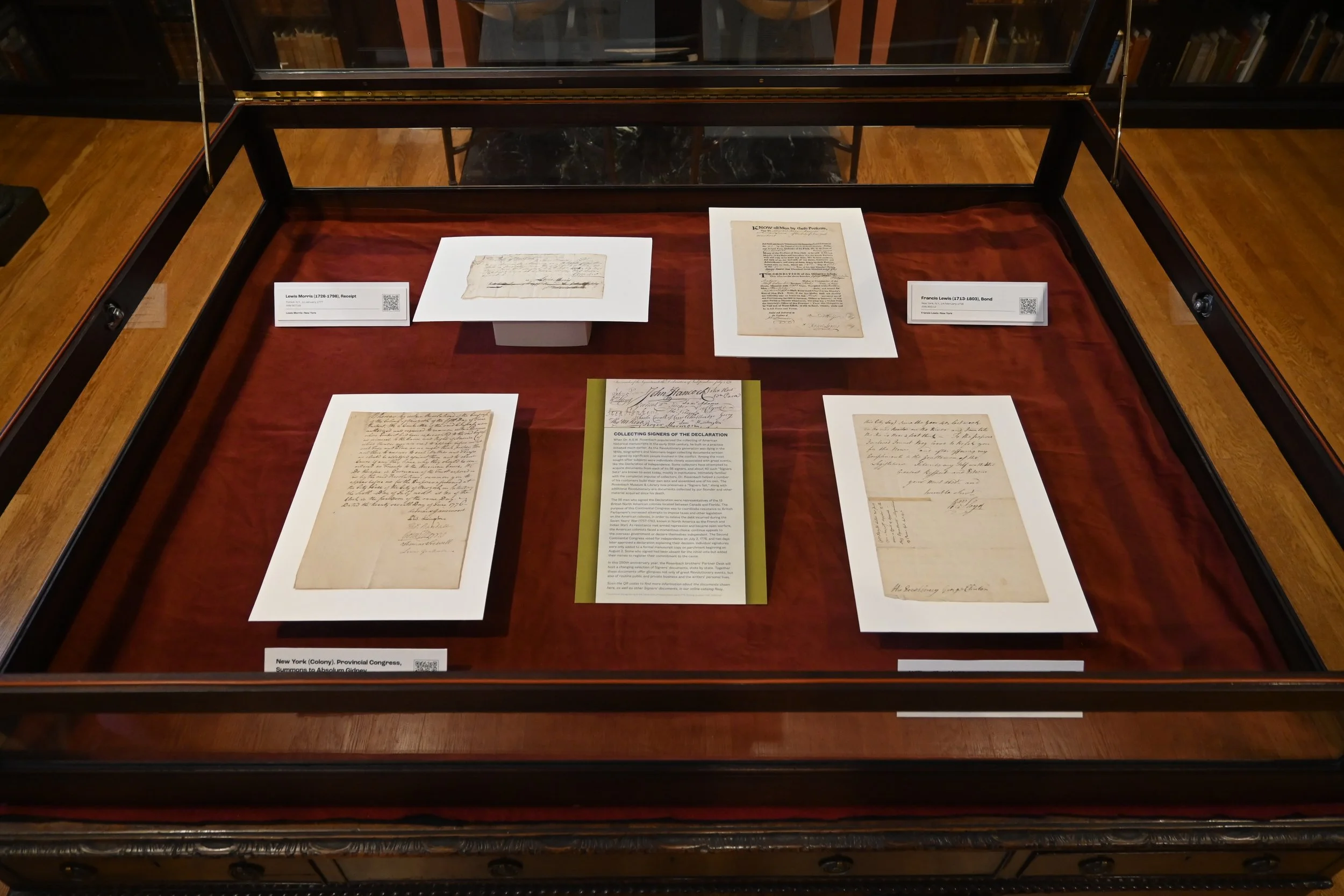
The April 2026 installation of Collecting the Signers of the Declaration. Image credit David Rhys Owen
When Dr. A.S.W. Rosenbach popularized the collecting of American historical manuscripts in the early 20th century, he built on a practice initiated much earlier. As the Revolutionary generation was dying in the 1810s, biographers and historians began collecting documents written or signed by significant people involved in the conflict. Among the most sought-after subjects were individuals closely associated with great events, like the Declaration of Independence. Some collectors have attempted to acquire documents from each of its 56 signers, and about 40 such “Signers Sets” are known to exist today, mostly in institutions. Intimately familiar with the completist impulse of collectors, Dr. Rosenbach helped a number of his customers build their own sets and assembled one of his own. The Rosenbach Museum & Library now preserves a “Signers Set,” along with additional Revolutionary-era documents collected by our founder and other material acquired since his death.
In this 250th anniversary year, the Rosenbach brothers’ Partner Desk will host a changing selection of Signers’ documents, state by state. Together these documents offer glimpses not only of great Revolutionary events, but also of routine public and private business and the writers’ personal lives.
These documents from the four New York signers illustrate some of their business activity in the years before the Revolution, as well as their political and military service during it. Visit the website of the National Constitution Center for useful biographies of all 56 signers.
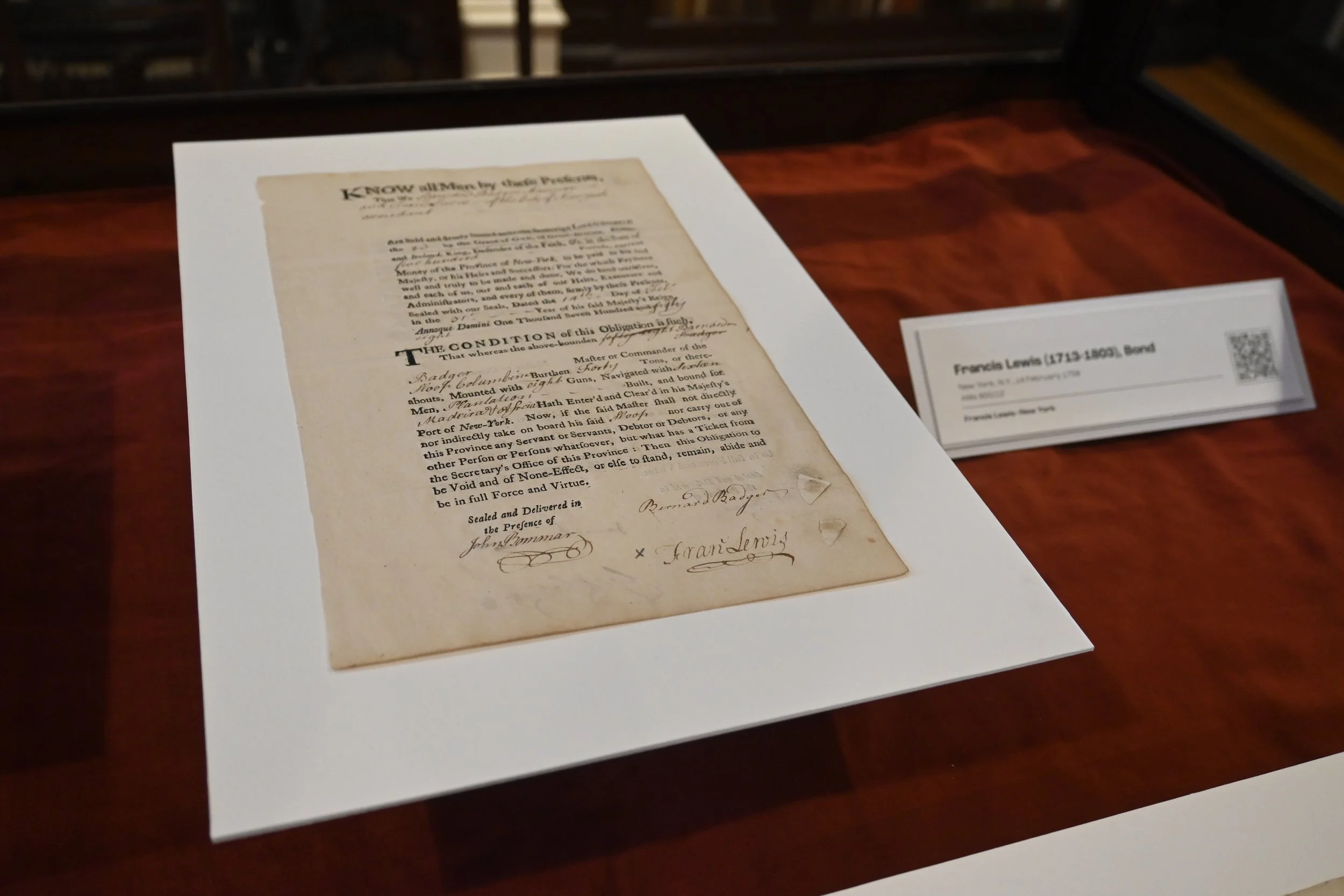
Signature of Francis Lewis. Image credit Bryn Michelson-Ziegler
Francis Lewis (1713-1803), Bond
New York, N.Y., 14 February 1758
AMs 800/12
Francis Lewis was a wealthy merchant with an extensive network of contracts. Several weeks before the date of this document, he had petitioned to license his ship Columbine as a privateer, allowing it to attack enemy shipping during the French and Indian War. Now, as the ship is about to depart, Lewis and the ship's master, Barnard Badger, agree not to provide transportation to any servants, debtors, or other people without permission to leave the colony.
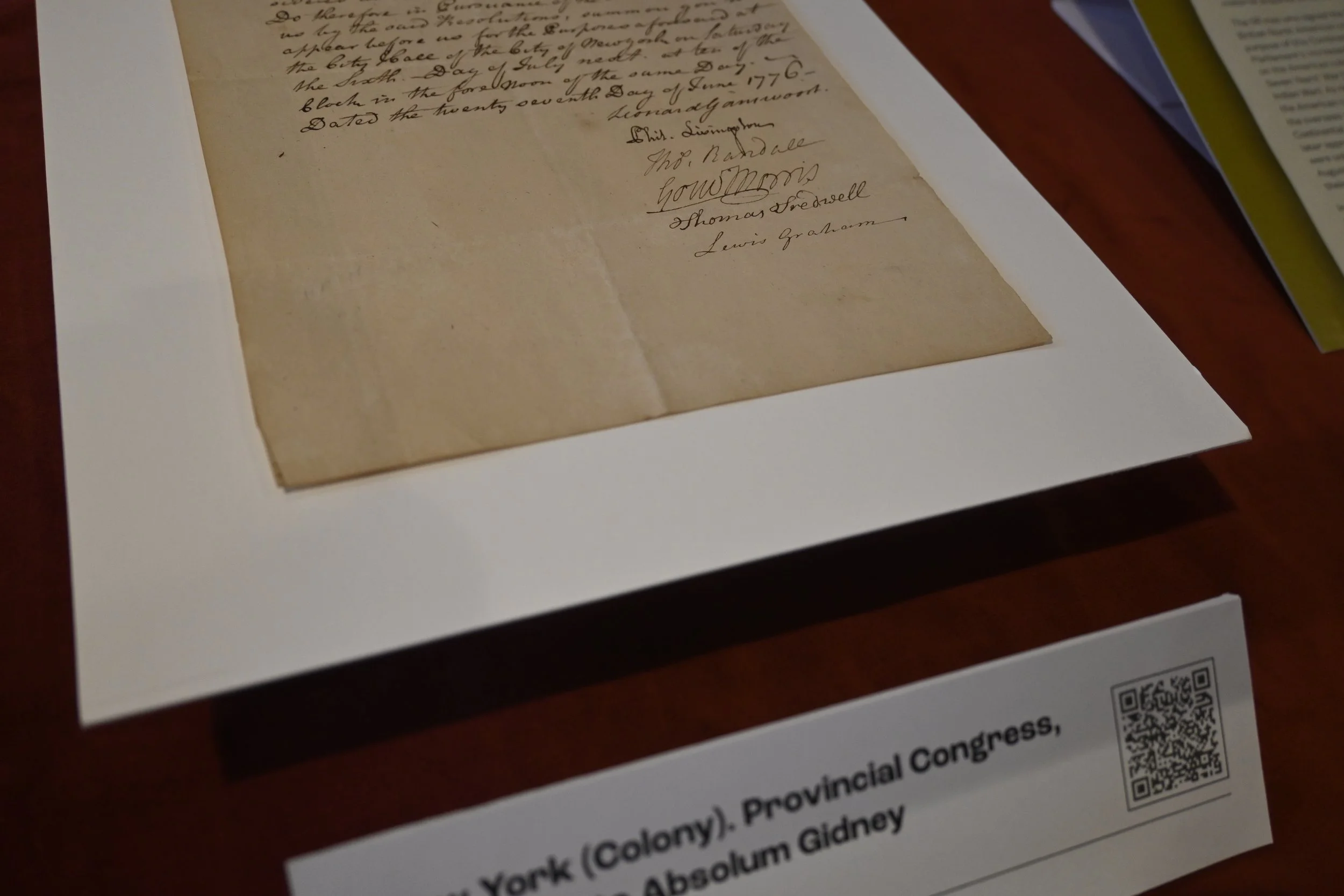
Signature of Philip Livingston. Image credit Bryn Michelson-Ziegler
New York (Colony). Provincial Congress, Summons to Absolum Gidney
New York, N.Y., 27 June 1776
AMs 364/7
Like many members of the Continental Congress, Philip Livingston simultaneously held office in his home state. In this document, he and other members of a committee of the New York Provincial Assembly summon Absolom Gidney, one of “certain persons represented ... as inimical to the cause and rights of America” who are to appear before the committee and “shew cause if any they have why they should be considered as friends to the American cause”. Gidney was from a large family of Loyalists, and some of his relatives fled to Canada to escape imprisonment.
Bonus Rosenbach collection connections: Another signer of this summons, Gouverneur Morris, was the younger half brother of New York signer Lewis Morris, also represented in this month’s display. Leonard Gansevoort, whose signature appears just above Livingston’s, was Herman Melville’s great uncle.
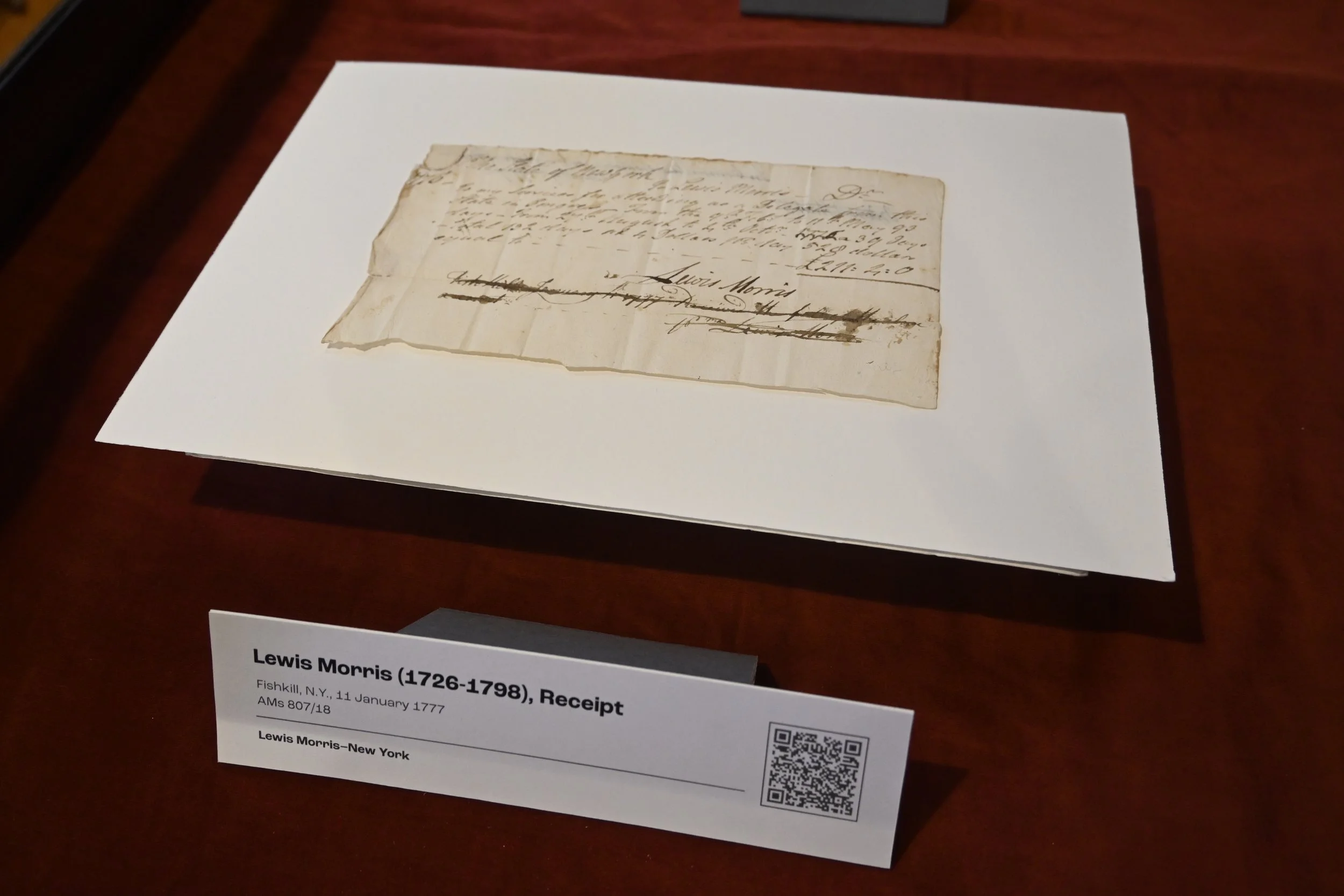
Signature of Lewis Morris. Image credit Bryn Michelson-Ziegler
Lewis Morris (1726-1798), Receipt
Fishkill, N.Y., 11 January 1777
AMs 807/18
Lewis Morris was from a wealthy and politically active family. His younger half brother Gouverneur Morris served in the New York Provincial Congress with Philip Livingston and later succeeded Lewis in the Continental Congress.
Lewis Morris signed this receipt for payment by the state of New York for his service as a delegate to Congress in 1776, service that was often frustrating in that crucial year. Although they were active supporters of independence, Morris and his fellow New York delegates had to abstain from voting in support of the resolution for independence on July 2 or the Declaration on July 4 because their legislature had not yet instructed them to do so. When the instructions arrived a week later they were able to sign with the rest.
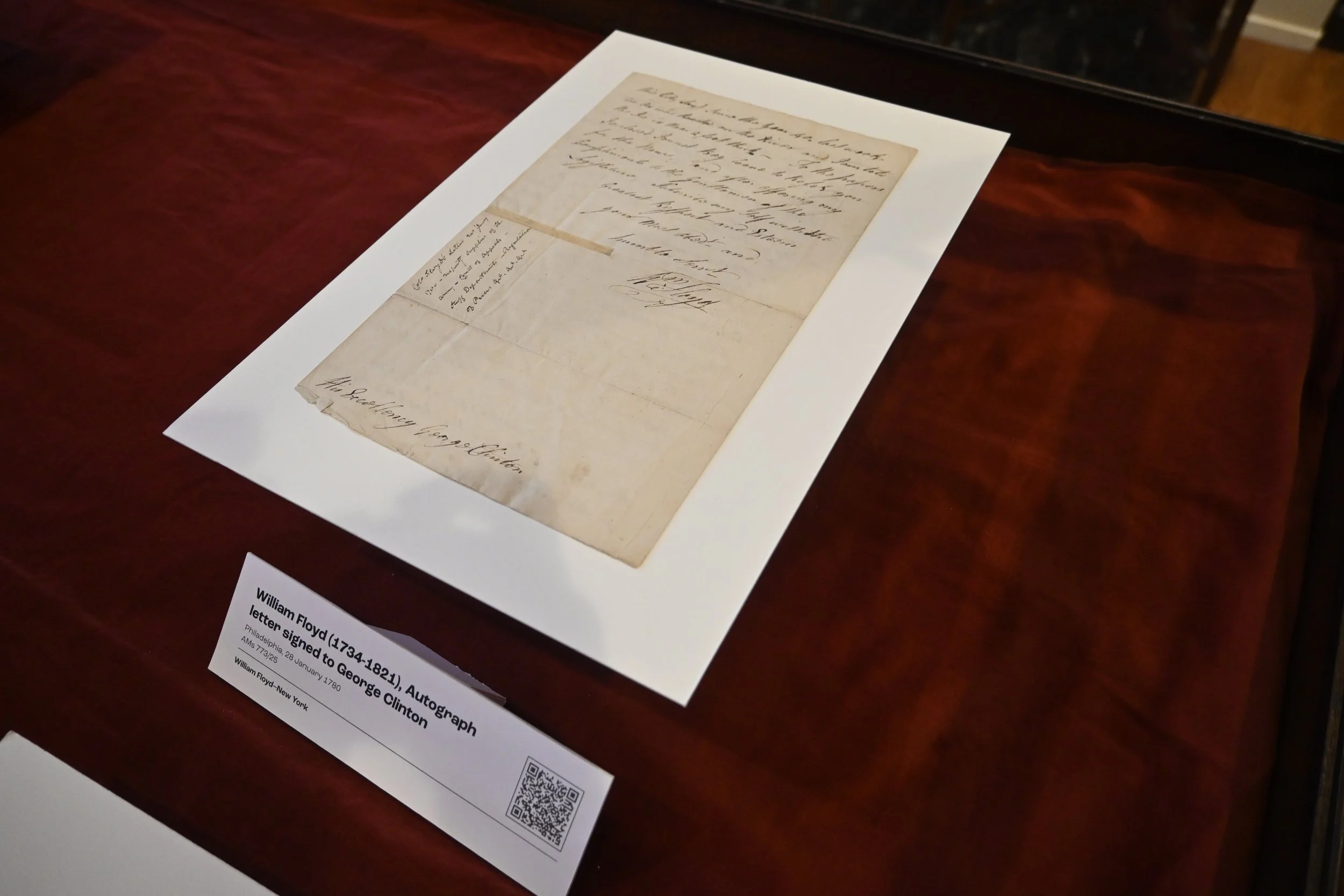
Signature of William Floyd. Image credit Bryn Michelson-Ziegler
William Floyd (1734-1821), Autograph letter signed to George Clinton
Philadelphia, 28 January 1780
AMs 773/25
Other members of the Continental Congress were also simultaneously in military service. William Floyd was an officer in the New York militia when he wrote to New York Governor Clinton about matters including the difficulty of getting provisions to the army in New Jersey and attempts to oversee the finances of the army and to regulate rewards for the capture of enemy ships and cargo. He closes his letter with a vivid description of severe weather:
“The five weeks past we have had the severest cold that has been known for that length of time (as the people of this city say) sine the year [17]40. Last week an ox was roasted on the [Delaware] River and I am told the ice is near 2 feet thick."
In May, the Rosenbach’s Partner Desk will showcase signers from New Jersey, and in June signers from our home state of Pennsylvania.