
Collecting Signers of the Declaration - New Jersey
by Elizabeth Fuller, Librarian
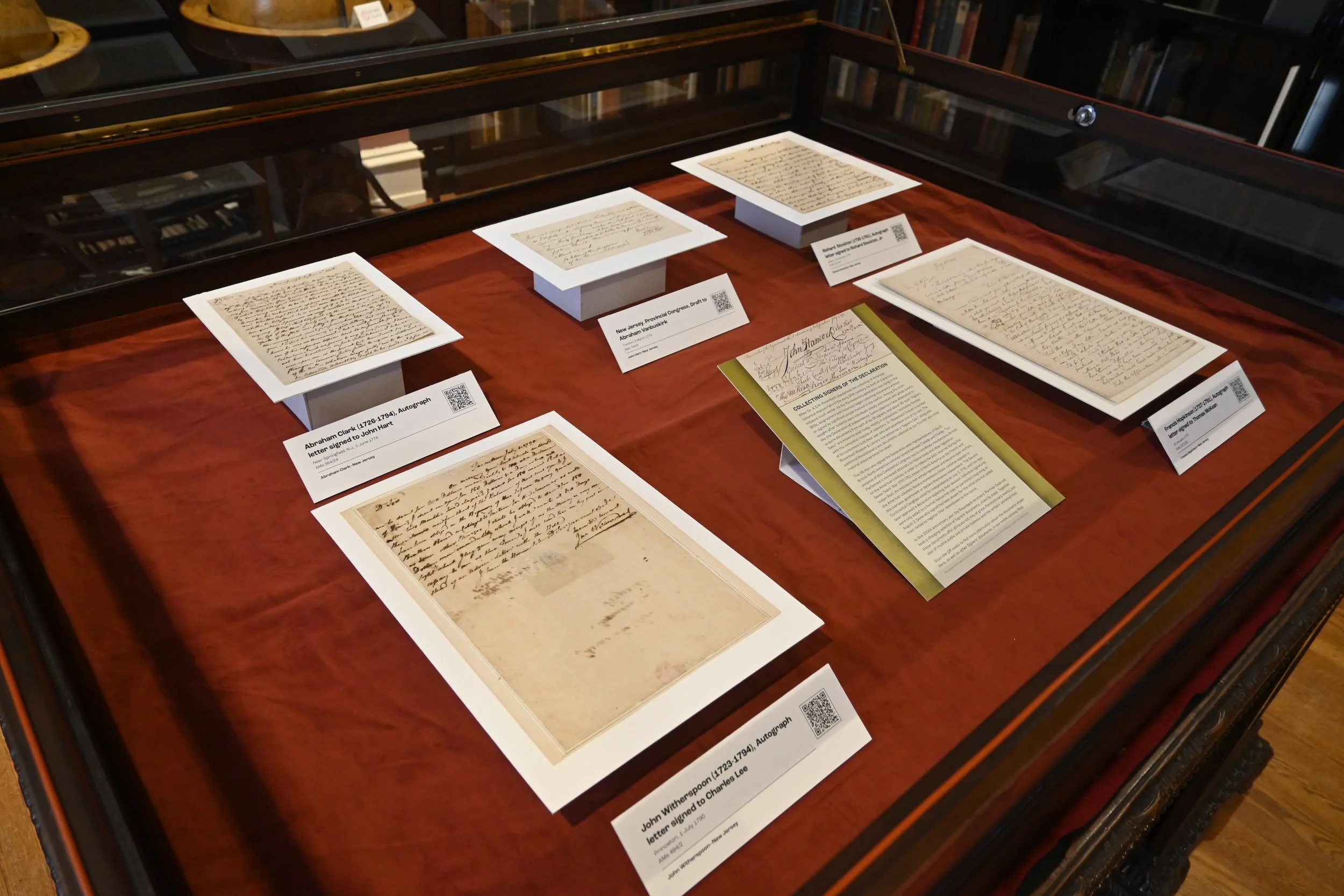
The May 2026 installation of Collecting the Signers of the Declaration. Image credit David Rhys Owen
When Dr. A.S.W. Rosenbach popularized the collecting of American historical manuscripts in the early 20th century, he built on a practice initiated much earlier. As the Revolutionary generation was dying in the 1810s, biographers and historians began collecting documents written or signed by significant people involved in the conflict. Among the most sought-after subjects were individuals closely associated with great events, like the Declaration of Independence. Some collectors have attempted to acquire documents from each of its 56 signers, and about 40 such “Signers Sets” are known to exist today, mostly in institutions. Intimately familiar with the completist impulse of collectors, Dr. Rosenbach helped a number of his customers build their own sets and assembled one of his own. The Rosenbach Museum & Library now preserves a “Signers Set,” along with additional Revolutionary-era documents collected by our founder and other material acquired since his death.
In this 250th anniversary year, the Rosenbach brothers’ Partner Desk will host a changing selection of Signers’ documents, state by state. Together these documents offer glimpses not only of great Revolutionary events, but also of routine public and private business and the writers’ personal lives.
These documents from the five New Jersey signers illustrate both important events and administrative details of the Revolutionary period as well as glimpses into their earlier and later careers. Visit the website of the National Constitution Center for useful biographies of all 56 signers.
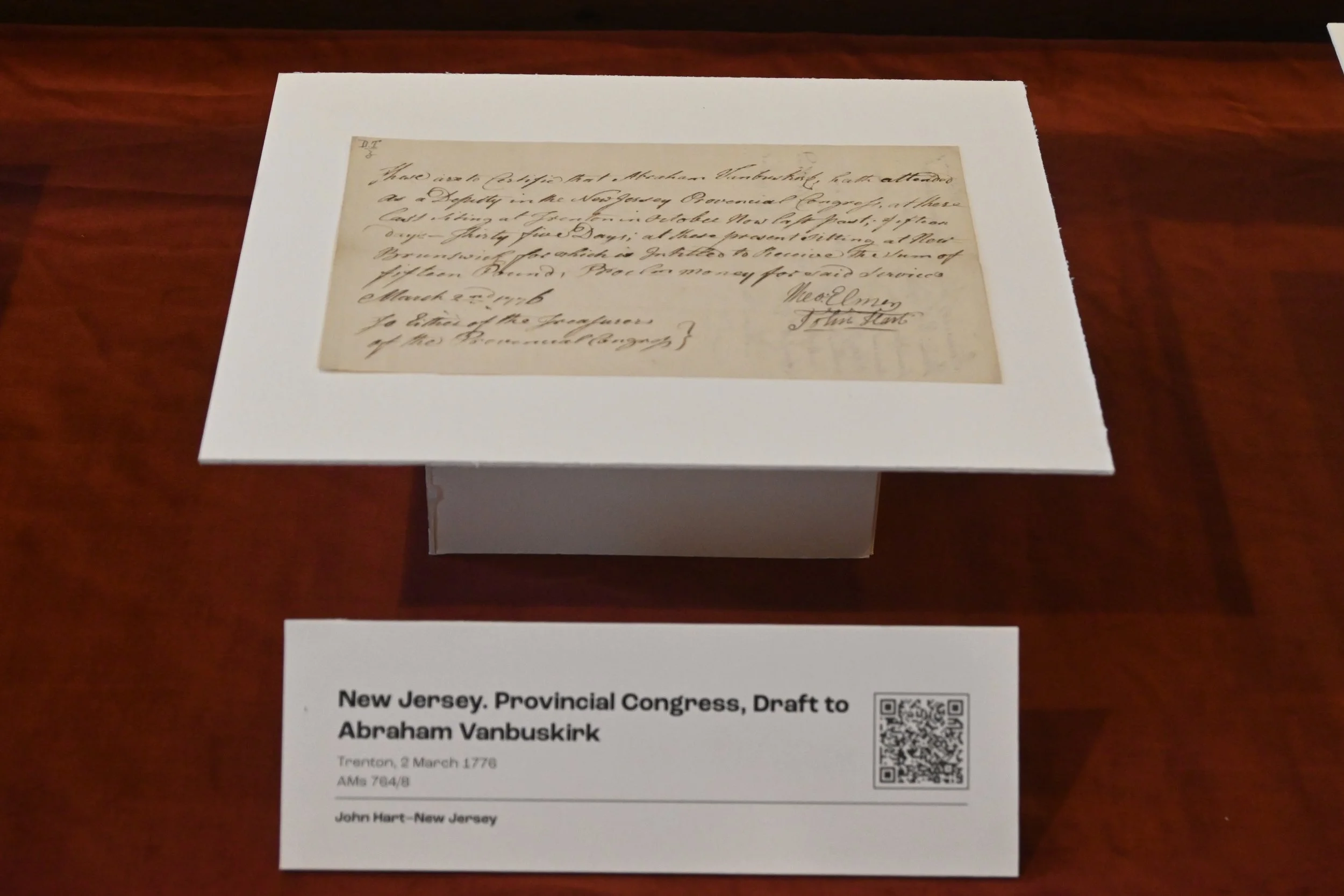
Signature of John Hart. Image credit Bryn Michelson-Ziegler
New Jersey. Provincial Congress, Draft to Abraham Vanbuskirk
Trenton, 2 March 1776
AMs 764/8
John Hart (1711?-1779) was a wealthy landowner with long experience in New Jersey government and Revolutionary politics. Like many other signers, he held office in his home state while also serving in the Continental Congress. As Vice President of the Provincial Congress of New Jersey he signed this very routine document authorizing a member of the legislature to be paid for his service. Van Buskirk had been supportive of complaints against the British government, but could not support the idea of independence. He moved to New York when the British captured the city, became an officer with a Loyalist volunteer regiment, and, like many Loyalists, left with the British when they evacuated and settled in Nova Scotia.
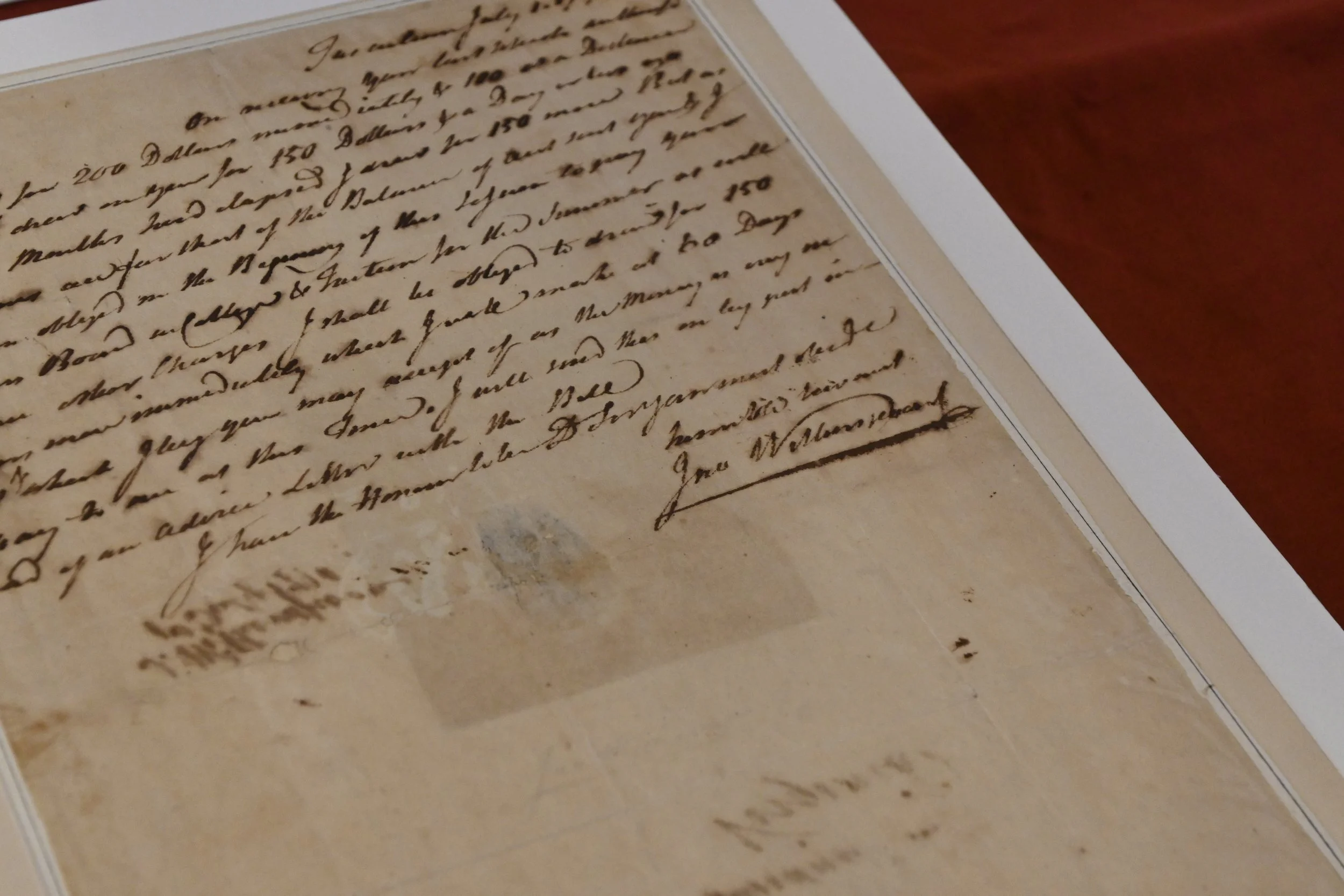
Signature of John Witherspoon. Image credit Bryn Michelson-Ziegler
John Witherspoon (1723-1794), Autograph letter signed to Charles Lee
Princeton, 1 July 1790
AMs 494/2
Witherspoon’s first career was as a Presbyterian minister in Scotland, where Enlightenment ideals led him and many fellow Protestant clergy to preach resistance to tyranny as a religious duty. His publications attracted the attention of future signers Benjamin Rush and Rush's eventual father-in-law Richard Stockton, who recruited Witherspoon in 1768 to become president of the College of New Jersey (now Princeton University), where he served until his death. Twelve of his students would eventually become members of the Continental Congress. He himself served in Congress from 1776 to 1784. The college was badly damaged during the war, and Witherspoon contributed from his personal funds to its rebuilding, as well as paying tuition for some indigent students. In this letter to his former student Charles Lee, he asks for repayment of the money he has advanced toward Lee’s younger brother’s tuition.
Richard Stockton (1730-1781), Autograph letter signed to Richard Stockton, Jr.
Albany, 13 October 1776
RUSH I:07:47
Stockton, a wealthy lawyer, was a member of New Jersey’s Provincial Council from 1768 until he joined the Continental Congress shortly before it declared independence. This letter to his twelve-year-old son was written when he was in the midst of a tour to inspect the Continental Army on behalf of Congress and determine its supply needs. He reports having visited Washington’s headquarters and and paints an optimistic picture of the army’s capabilities, though he knew they were seriously under-provisioned. He concludes by affectionately encouraging the boy to attend to his studies, “for being a good scholar will make you a man of consequence, and being a good man will make you happy.” Shortly after this was written, he was captured and imprisoned by the British for four months before being released on parole.
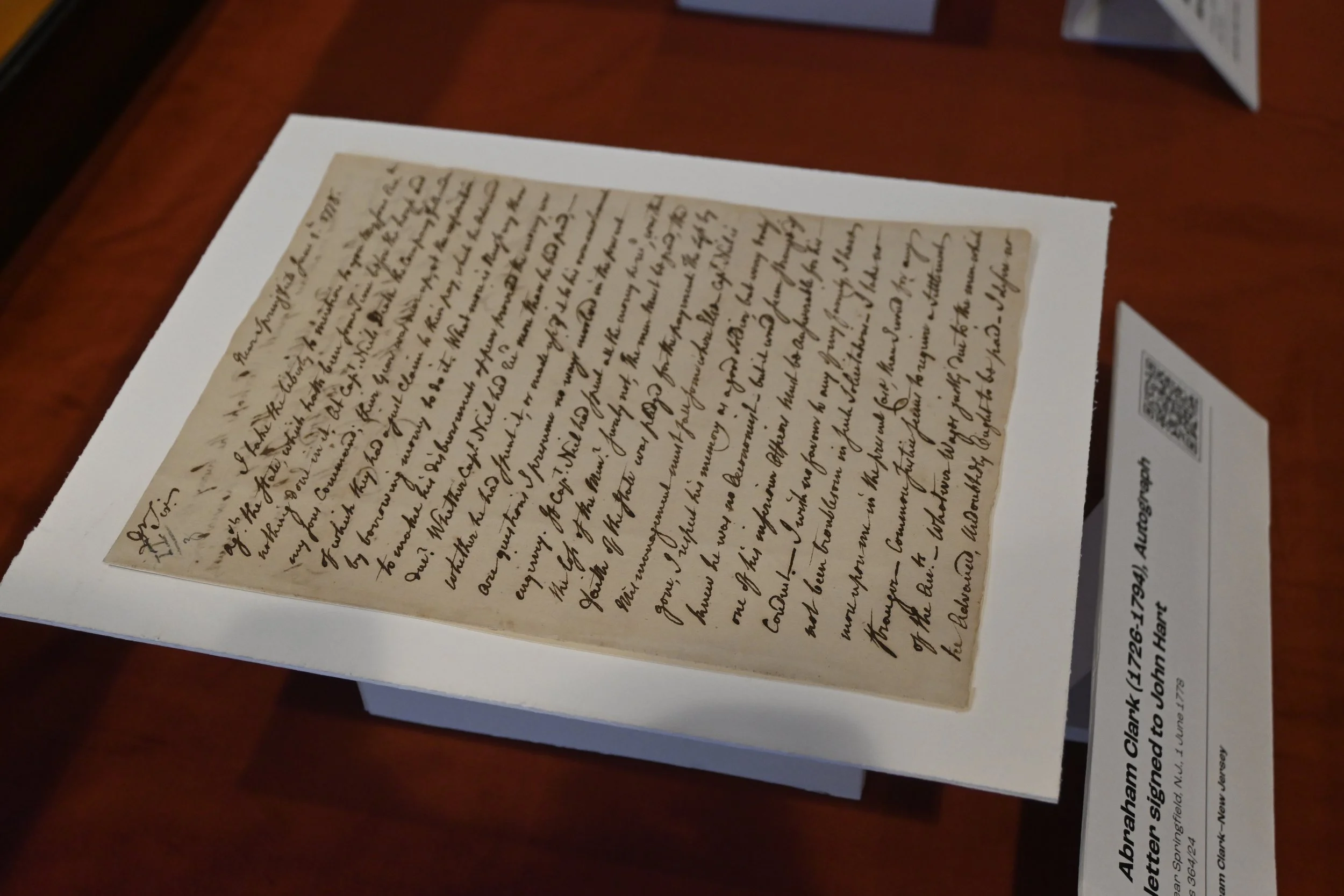
Autograph letter by Abraham Clark. Image credit Bryn Michelson-Ziegler
Abraham Clark (1726-1794), Autograph letter signed to John Hart
Near Springfield, N.J., 1 June 1778
AMs 364/24
Trained as a surveyor, Clark later became a lawyer and focused on pro bono work for those who could not afford legal fees. He was involved in government offices in New Jersey and later a member of the U.S. House of Representatives. Two of his sons served as officers of a New Jersey artillery company during the Revolution. Thomas (ca. 1755-1789) succeeded to the command of the company when its captain, Daniel Neil, was killed at the Battle of Princeton. Shortly afterward the soldiers were due to receive their pay, and the money Neil had been given for the purpose could not be found, so Thomas borrowed money to make the payments. More than a year later, his father was still appealing in this letter to his friend and fellow signer John Hart to have him reimbursed. Later in the war Thomas and his brother Aaron were captured by the British and spent time in harsh conditions aboard a prison ship.
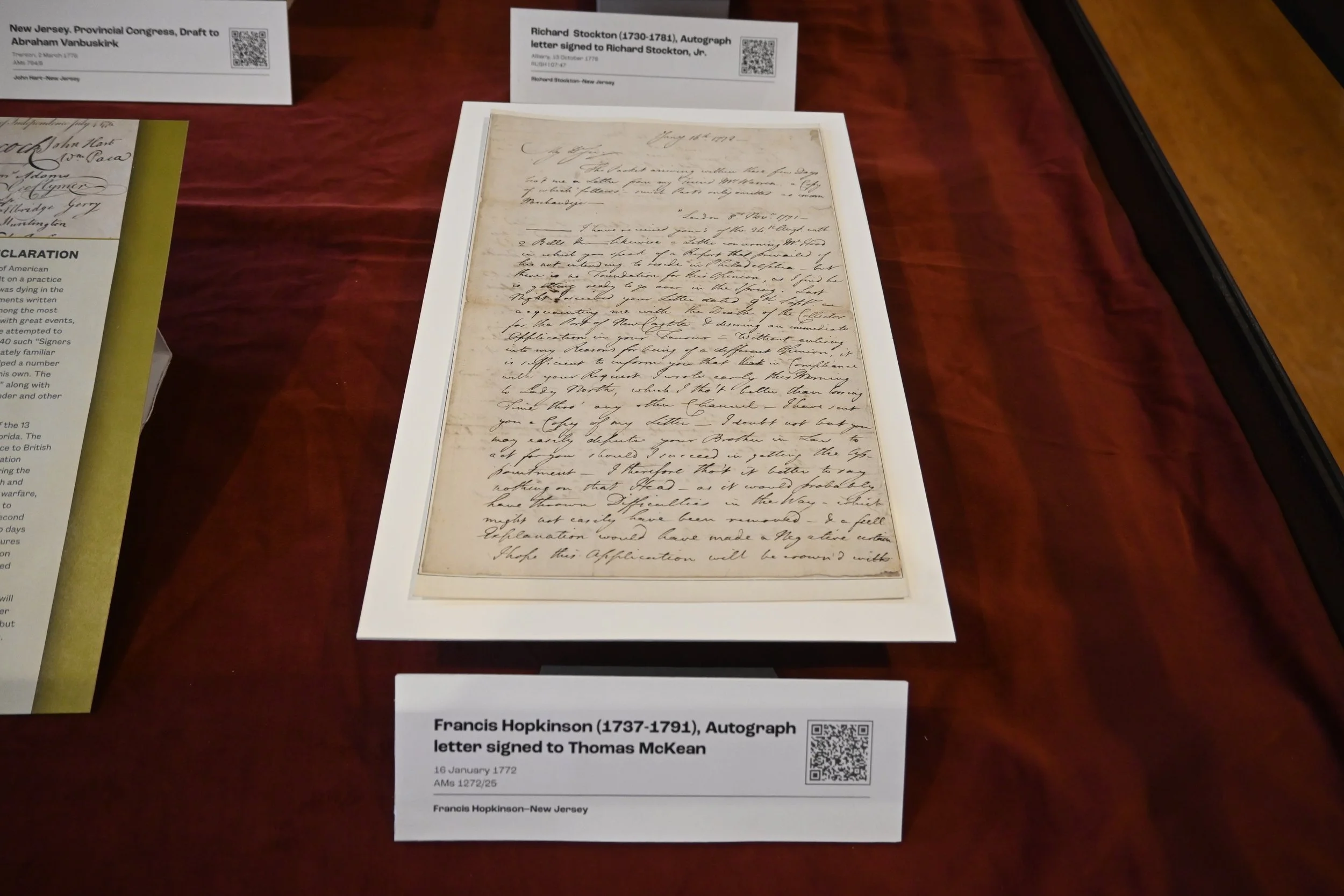
Autograph letter by Francis Hopkinson. Image credit Bryn Michelson-Ziegler
Francis Hopkinson (1737-1791), Autograph letter signed to Thomas McKean
16 January 1772
AMs 1272/25
Hopkinson was a man of many talents: a lawyer, judge, poet, satirist, composer, and visual artist. He also had a talent for persistence and making use of connections. Unsuccessful in his first career as a lawyer, he became Collector of Customs for Salem, New Jersey, then in 1766 went to England to try to get appointment as collector at a larger port through family connections including his relative by marriage Lord North. Not succeeding, he returned home and started in business as a storekeeper. He continued to pursue the customs appointment, and in this letter to his brother-in-law and fellow signer Thomas McKean reports his progress, including approaches to Lord North, who by then was Prime Minister, and opinions about the legality of having McKean fill the position as his deputy. Several months later he was appointed Collector for the port of New Castle, and McKean eventually succeeded him in the post. Their friendly relationship did not survive McKean’s wife’s death the year following this letter, and political differences eventually drove them to hostility.
To learn more about the Founding Fathers from New Jersey, take a trip to Morven Museum & Garden in Princeton, NJ! The Rosenbach is pleased to loan six objects from its collection to Morven for their semi-quincentennial exhibition, Five Independent Souls, on view through January 17, 2027.
In June, the Rosenbach’s Partner Desk will showcase signers from our home state of Pennsylvania.