
by David Rhys Owen, Director of Collections & Research Services
Research often develops through ongoing engagement with our collections.
From July 1, 2025, to June 30, 2026, the Rosenbach had 205 visits by 114 individuals, with many researchers returning to the Reading Room on multiple occasions. Some projects require sustained study, particularly when exploring our collections of approximately 400,000 rare books, manuscripts, and fine and decorative arts objects.
However, repeat visits are not simply a matter of finishing what was started. Projects evolve, technologies advance, new research tools and methods become available, and discoveries elsewhere can recontextualize earlier findings in our collections. Researchers may simply enjoy the hospitality of our wonderful librarians!
Marissa O. Nicosia is Professor of Renaissance Literature at Penn State Abington and has been visiting the Rosenbach since 2012. She teaches and writes about early modern English literature, food studies, and book history, and runs the food history website, Cooking in the Archives.
Her 2023 study, Imagining Time in the English Chronicle Play, drew on research at the Rosenbach to consider how playwrights in the late 16th and early 17th century imagined possible futures in dramatic works ostensibly written about the past. The study brought well-known chronicle plays, including the works of William Shakespeare, into conversation with anonymous and often overlooked material.
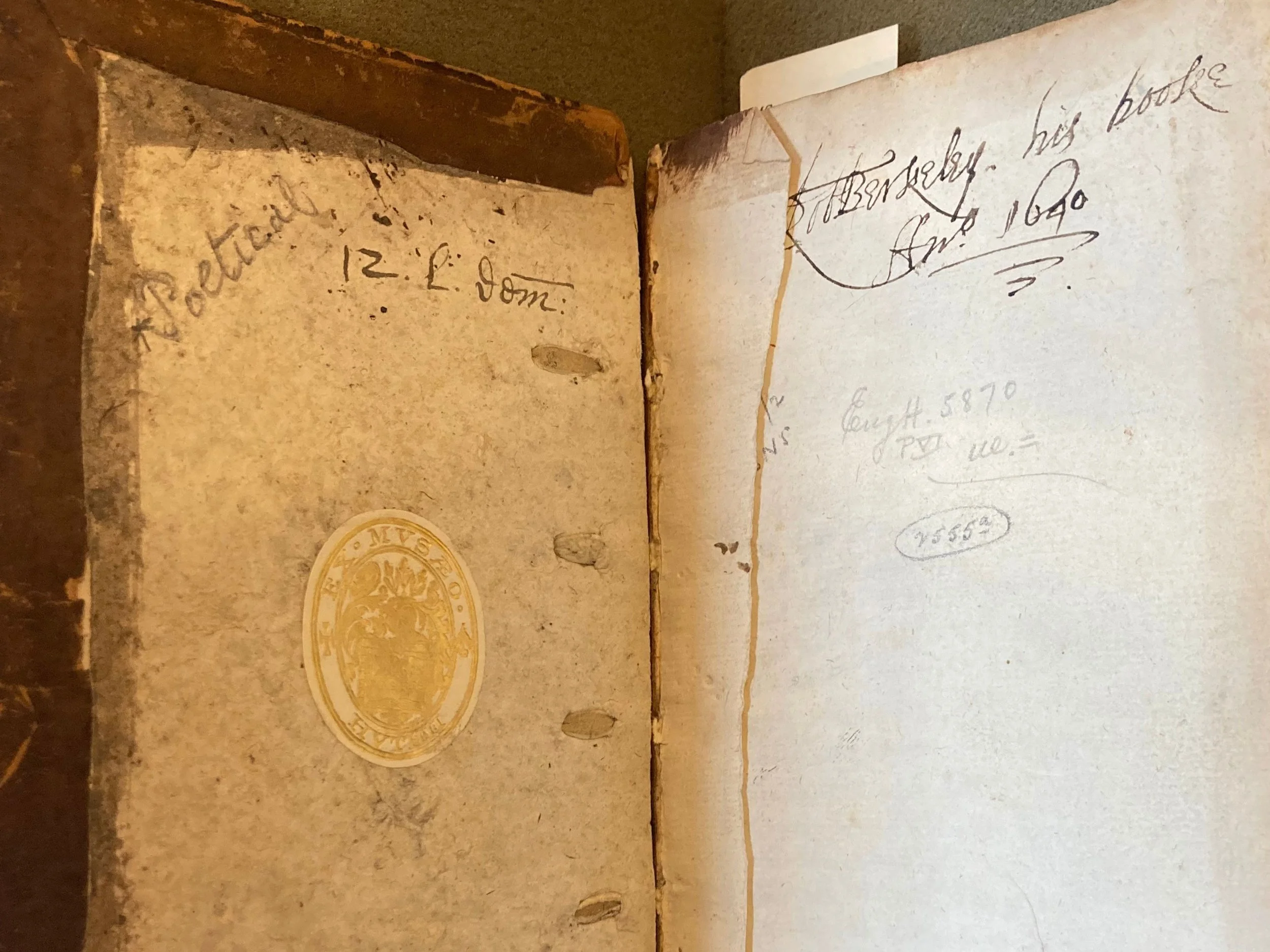
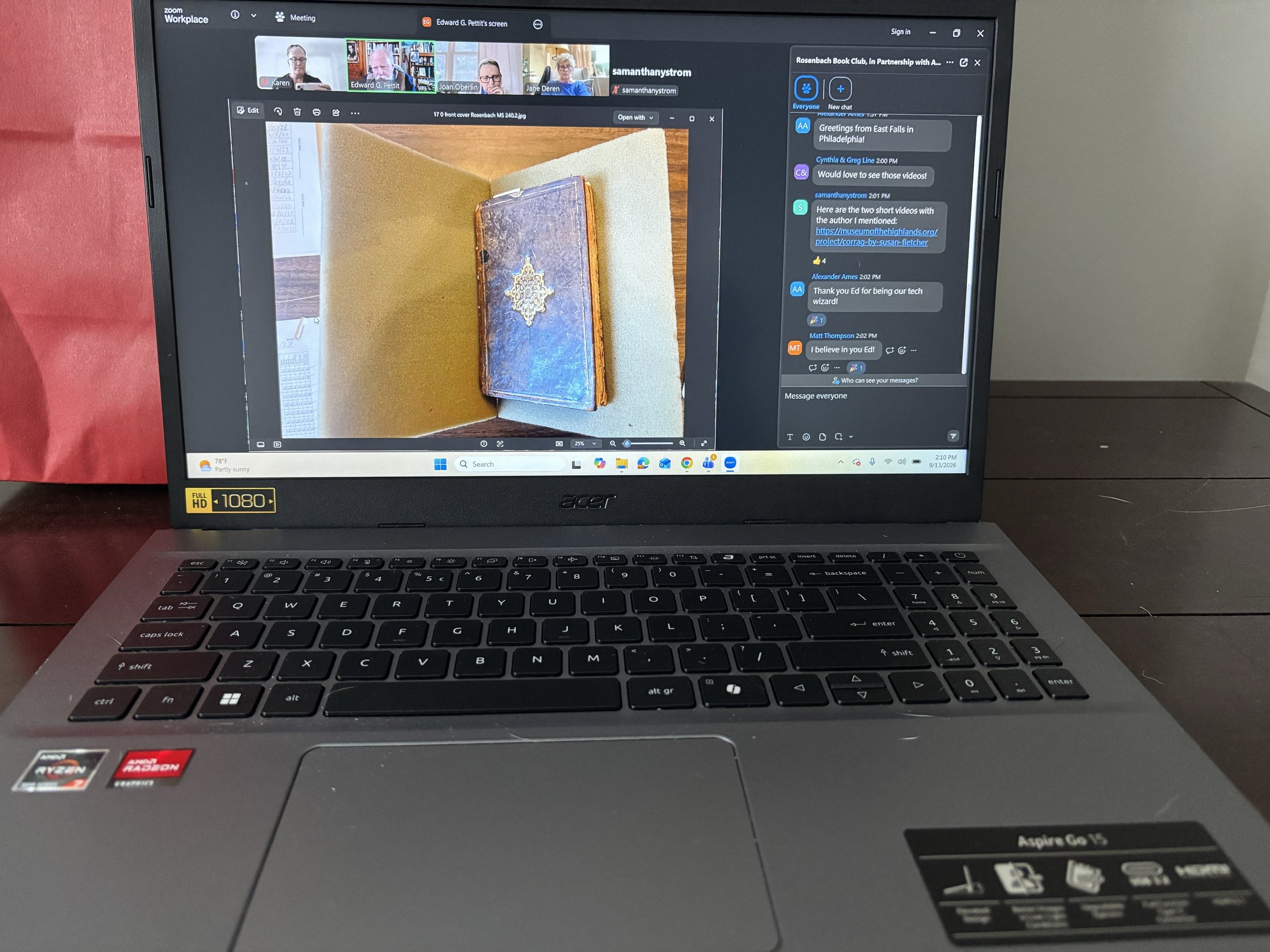
In June 2026, Nicosia returned to the Reading Room to study our holdings of 17th-century commonplace books, one of which she had encountered during a visit three years earlier. The small codex manuscript [MS 240/2] is filled with lyric poems and medical recipes. It is inscribed on the inner front flyleaf with the name of an owner and compiler: “Rob Berkeley. his booke / Ano. 1640.”
In collaboration with Dianne Mitchell, Assistant Professor at the University of Colorado Boulder and another long-time researcher at the Rosenbach, Nicosia has been working on an article examining exactly how these texts were compiled by Berkeley. Nicosia and Mitchell posit that the “titillating lyrics” and recipes for family healthcare were entered concurrently rather than sequentially. This overlap, they argue, “allows us to read across the poems and recipes in the volume in new ways as we trace flowers, bodies, and children from lyric to medicine and back again."
When Nicosia and Mitchell’s article is available to read, you’ll be able to find it in our new bibliography of publications based on research at the Rosenbach. Hosted through the free and open-source reference management software Zotero, the bibliography contains more than 1,300 items and counting. Researchers share their work on our collections in many different forms, from books, journal articles, and book chapters, to exhibitions, visual and performance arts, and Rosenbach programs.
Research at the Rosenbach, however, is not limited to traditional scholarship. We make our collections available for study by anyone, from scholars to artists, writers, and others with inquiring minds. During the last year, less than half of our researchers were traditional scholars; 16% came from libraries, archives, museums, and other cultural institutions, and 21% were pursuing research for personal interest.
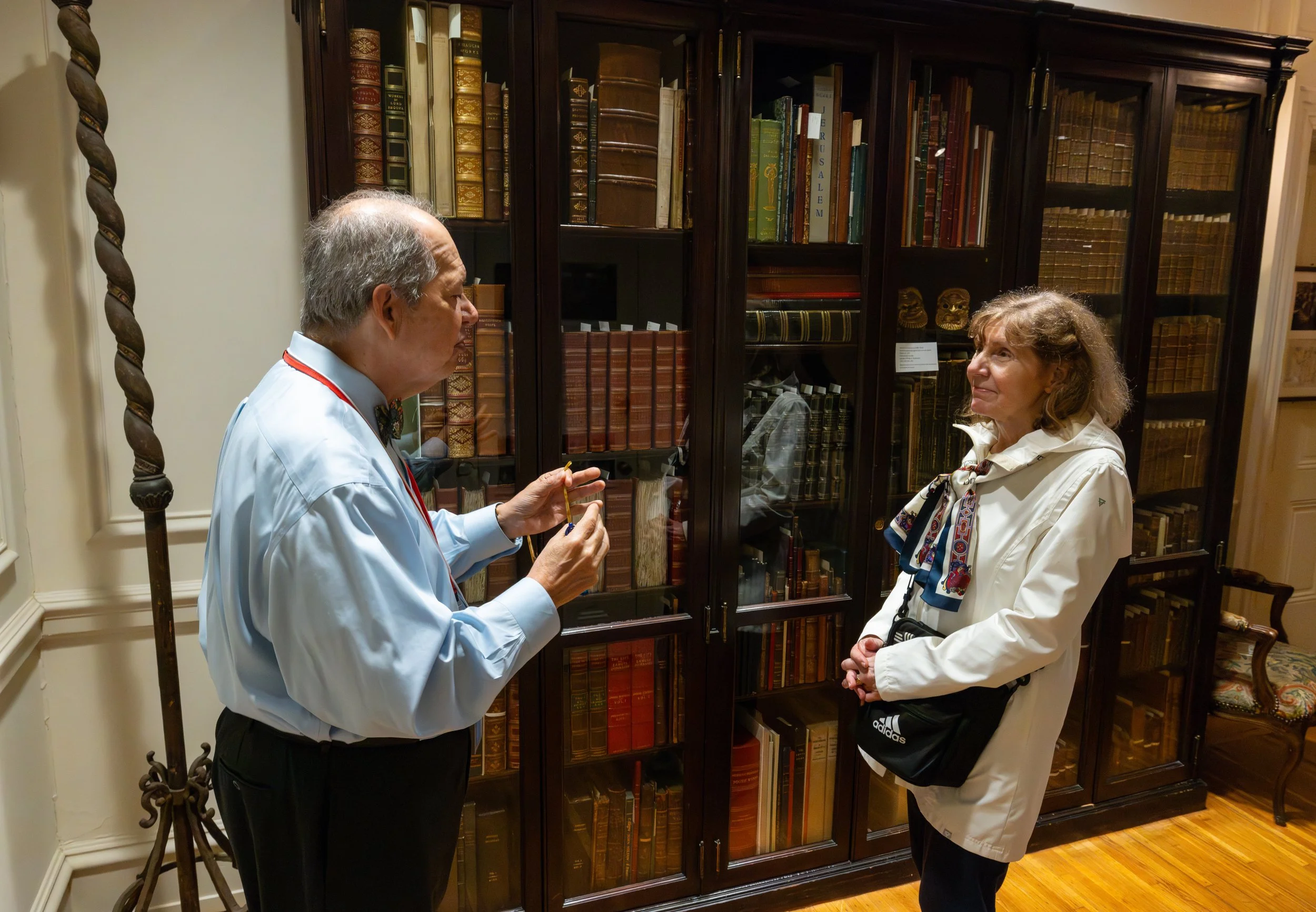
Joseph R. Gonzales is another regular visitor to the Reading Room. Since the start of 2025, Gonzalez has visited more than a dozen times to study everything from the Rosenbach’s extensive holdings of Herman Melville to our recently-acquired first American edition of The Hobbit [EL4 .T650h 938].
Gonzales leads guided tours through our historic house on Delancey Place and values the opportunity to schedule research appointments: “I am actively involved in continuously improving my knowledge of the depth and breadth of the Rosenbach’s collection [...and this] allows me to give substantive answers to any questions visitors pose.”
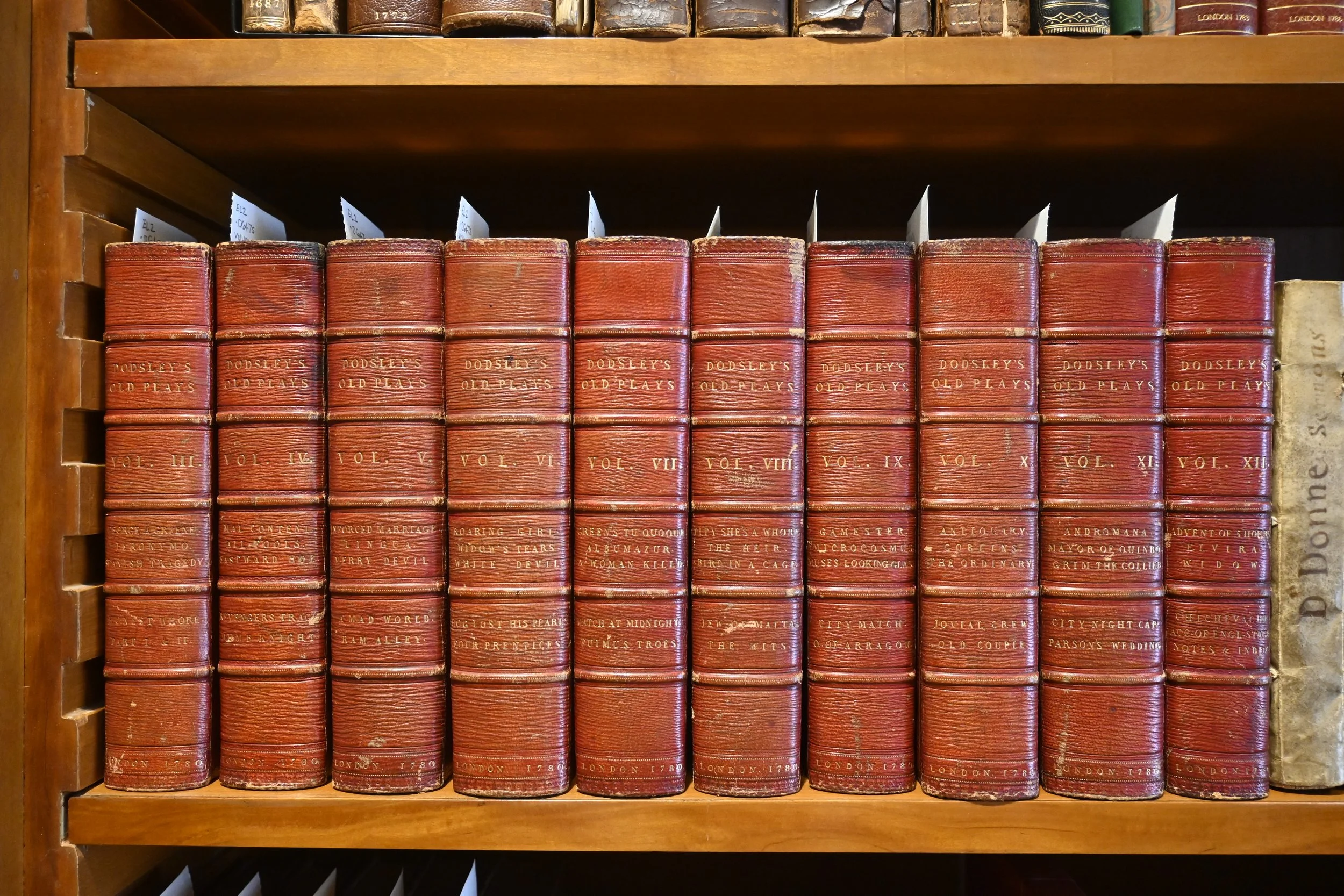
During recent visits, he explored annotations in quartos of Shakespeare’s individual plays, as well as the 1780 second edition of Robert Dodsley’s A Select Collection of Old Plays [EL2 .D647s]. Originally assembled by Dodsley in the 18th century and subsequently revised and expanded, the collection made dozens of scarce 16th and 17th-century plays newly accessible and helped establish a history of English drama extending beyond Shakespeare.
That research, in turn, feeds directly back into Gonzales’s work with visitors, allowing him to move beyond familiar stories about individual objects and place the collections in richer literary, historical, and bibliographical contexts. It also gives him more ways to make connections between objects and respond to questions that emerge during a tour. As he explains, “these activities increase my knowledge and enhance my ability to bring the Rosenbach collection alive for visitors who come for a guided tour.”
Every return visit provides an opportunity to see the collections a little differently. Whether researchers are developing a long-term project, following a new line of inquiry, or preparing to share what they have learned with others, time spent in the Reading Room brings new questions, connections, and possibilities to our collections.
Notes from the Reading Room is a monthly segment on the Rosenblog. Learn about our efforts to manage and care for some of the best-known literary and historical objects in the world, and to make our collections available to researchers and other audiences around the globe. Book a research appointment to make your own discoveries and enjoy a personalized experience with our collections.