
All Program Dates
November 12, 2026 | 6:00pm - 7:30pm ET
November 19, 2026 | 6:00pm - 7:30pm ET
December 3, 2026 | 6:00pm - 7:30pm ET
December 10, 2026 | 6:00pm - 7:30pm ET
December 17, 2026 | 6:00pm - 7:30pm ET
Registration
Tuition for this course is $300. Members receive exclusive discounts on our programs and courses. Not a member? Learn more.
Please check your spam folder for your email confirmation. If you have questions, please call (215) 732-1600 or email rsvp@rosenbach.org.
This program is for those 18 and older.
To promote access to onsite and virtual Rosenbach experiences, we offer scholarships for each Signature Program. To inquire, email Sunstein Senior Manager of Digital Initiatives Edward G. Pettit at epettit@rosenbach.org.
Registration opens for Delancey Society members on Thursday, August 27, for Rosenbach members on Thursday, September 3, and for the general public on Thursday, September 10.
Description
Until Emma Thompson’s movie of 1995, Sense and Sensibility was not a favorite of general readers or literary critics. The novel was typically regarded as a tendentious exercise in demonstrating the superiority of sense over sensibility, moderation over excess, discipline over self-indulgence. In other words, using the novel’s characters: Elinor good, Marianne bad. An assumption about Austen’s career arc was recruited to build this case against the novel. As an “early” novel, it was considered simple, while Austen’s later novels were mature and complex. We will launch our Sense and Sensibility-fest by reading some of Austen’s early sketches, whose complexity, penetration, and energy will provide us with a suggestive backdrop for the novel. Here are some of the questions up for discussion: Are the titular abstractions really in opposition throughout the novel? Does the novel satirize one and vindicate the other? How does this novel represent “commonplace” values of wealth and status? How does the novel represent the “heroes” (Col. Brandon, Willoughby, Edward Ferrars)? What is the role of the two Eliza narratives in the novel? Why is there so much doubling in this novel? And more. Throughout, my aspiration is to read the novel with the respect it deserves and requires.
Sense and Sensibility syllabus
About the Instructor
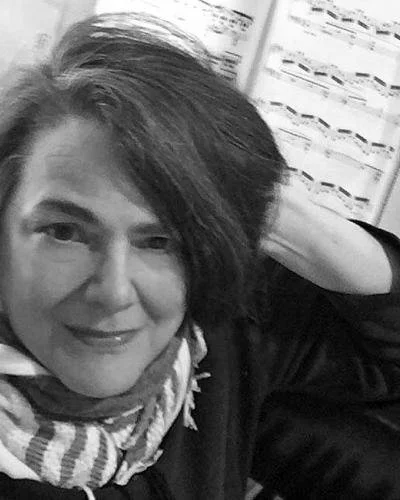
Claudia L. Johnson joined the faculty at Princeton in 1994 and was Chair of the English Department from 2004-2012. She specializes in 18th- and early 19th-century literature, with a particular emphasis on the novel. In addition to 18th-century courses, she teaches courses on Gothic fiction, sentimentality and melodrama, the history of prose style, film adaptations of novels into film, detective fiction, Samuel Johnson, and, of course, Jane Austen. Johnson’s Jane Austen’s Cults and Cultures (Chicago, 2012) won the Christian Gauss Award in 2013. More recently she has published a deluxe edition of Jane Austen’s The Beautifull Cassandra (Princeton, 2018) in collaboration with artist Leon Steinmetz, and 30 Great Myths about Jane Austen (Blackwell, 2020) in collaboration with Clara Tuite. Her other books include The Blackwell Companion to Jane Austen, ed. with Clara Tuite (Blackwell, 2005), The Cambridge Companion to Mary Wollstonecraft (Cambridge, 2002), Equivocal Beings: Politics, Gender and Sentimentality in the 1790s (Chicago, 1995), which won an Honorable Mention for the MLA Lowell Prize, and Jane Austen: Women, Politics, and the Novel (Chicago, 1988). In addition, she is keenly interested in textual scholarship and has prepared editions of Jane Austen’s Mansfield Park, Sense and Sensibility, Northanger Abbey and (with Susan Wolfson) Pride and Prejudice. Her research has been supported by major fellowships, such as the NEH and the Guggenheim. Previously for the Rosenbach, Johnson led a course on Northanger Abbey.