
All Program Dates
October 8, 2026 | 7:30pm - 9:00pm ET
October 22, 2026 | 7:30pm - 9:00pm ET
November 5, 2026 | 7:30pm - 9:00pm ET
November 19, 2026 | 7:30pm - 9:00pm ET
December 3, 2026 | 7:30pm - 9:00pm ET
December 17, 2026 | 7:30pm - 9:00pm ET
Registration
Tuition for this course is $360. Members receive exclusive discounts on our programs and courses. Not a member? Learn more.
Please check your spam folder for your email confirmation. If you have questions, please call (215) 732-1600 or email rsvp@rosenbach.org.
To promote access to onsite and virtual Rosenbach experiences, we offer scholarships for each Signature Program. To inquire, email Sunstein Senior Manager of Digital Initiatives Edward G. Pettit at epettit@rosenbach.org.
This program is for those 18 and older.
Registration opens for Delancey Society members on Thursday, August 27, for Rosenbach members on Thursday, September 3, and for the general public on Thursday, September 10.
Description
Bram Stoker’s Dracula (1897) is the found-footage horror story of its day, the Blair Witch Project of the Victorian era. Over a century ago, contemporary critics, in every part of the world, described Dracula as impossible to set aside until the end is reached, and that’s probably because readers felt almost like voyeurs reading what amounted to snuff. The immense privacy and repression pervading turn-of-the-century Britain and America had readers scrambling to peer through the peephole, or keyhole, that was Bram Stoker’s vampire novel. Indeed, contrary to popular belief, what early critical responses predominantly say about Dracula’s publication is not “mixed,” but rather that the novel paralleled—even, according to some, superseded—the Gothic works of such canonical writers as Mary Shelley, Ann Radcliffe, J. Sheridan Le Fanu, and Edgar Allan Poe. (One reviewer, in fact, even calls Stoker the “Edgar Allan Poe of the nineties.”) For us today, Dracula offers valuable insight into the immediate emotions and anxieties that pervaded reading publics at the fin de siècle. Dracula may even have been one of the most reviewed books of the entire Victorian literary canon, and in the almost 130 years since, has inspired innumerable reprints, films, plays, games, cartoons, etc., etc., in something close to 50 languages across the globe. Dracula lives, has lived, and will continue living, through us readers. The blood—our blood—is the life. Join one of the pre-eminent vampire scholars of our time, John Edgar Browning, in a six session seminar exploring Bram Stoker’s Dracula.
The Rosenbach is the home of Bram Stoker’s Notes for Dracula, over 100 pages of outlines, early plot ideas, and research notes, compiled by the author over the seven years he developed and wrote the novel. Also in our holdings are first editions of the novel, including the first paperback publication of Dracula.
Instructor
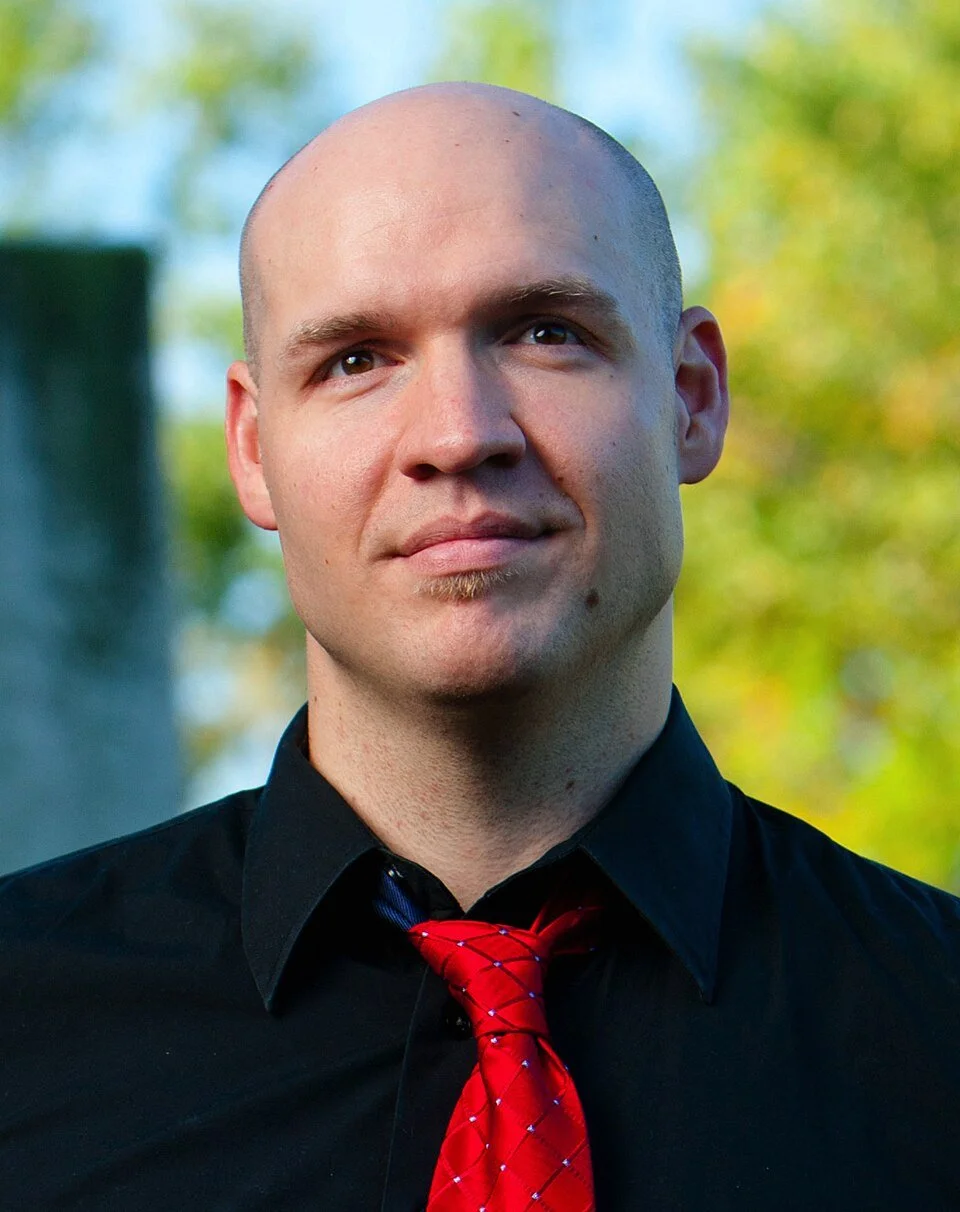
John Edgar Browning (PhD, SUNY-Buffalo) is an internationally recognized authority on the horror genre, vampires, Bram Stoker, and monster theory and has written and edited several books including The Forgotten Writings of Bram Stoker (Palgrave Macmillan, 2012) and the forthcoming Dracula—An Anthology: Critical Reviews and Reactions, 1897–1920 (Edinburgh University Press), critical editions of Montague Summers’s The Vampire: His Kith and Kin and The Vampire in Europe (Apocryphile Press, 2011, 2014), co-wrote Dracula in Visual Media (McFarland, 2010) and co-edited New Queer Horror Film and Television (Horror Studies) (University of Wales Press, 2020). He is also co-editor of the second Norton Critical Edition of Dracula (2021) with David J. Skal. Additionally, Browning spent five years in the field in New Orleans, LA, and Buffalo, NY conducting ethnographic studies of people who self-identify as vampire, a project he elaborated on in his doctoral dissertation, "Redeeming the Un-Dead in American Media and Culture Before 9/11.” He teaches at Bowling Green State University in the School of Cultural and Critical Studies.